

Lemongrass distillation - the Lemongrass is distilled directly after cutting it
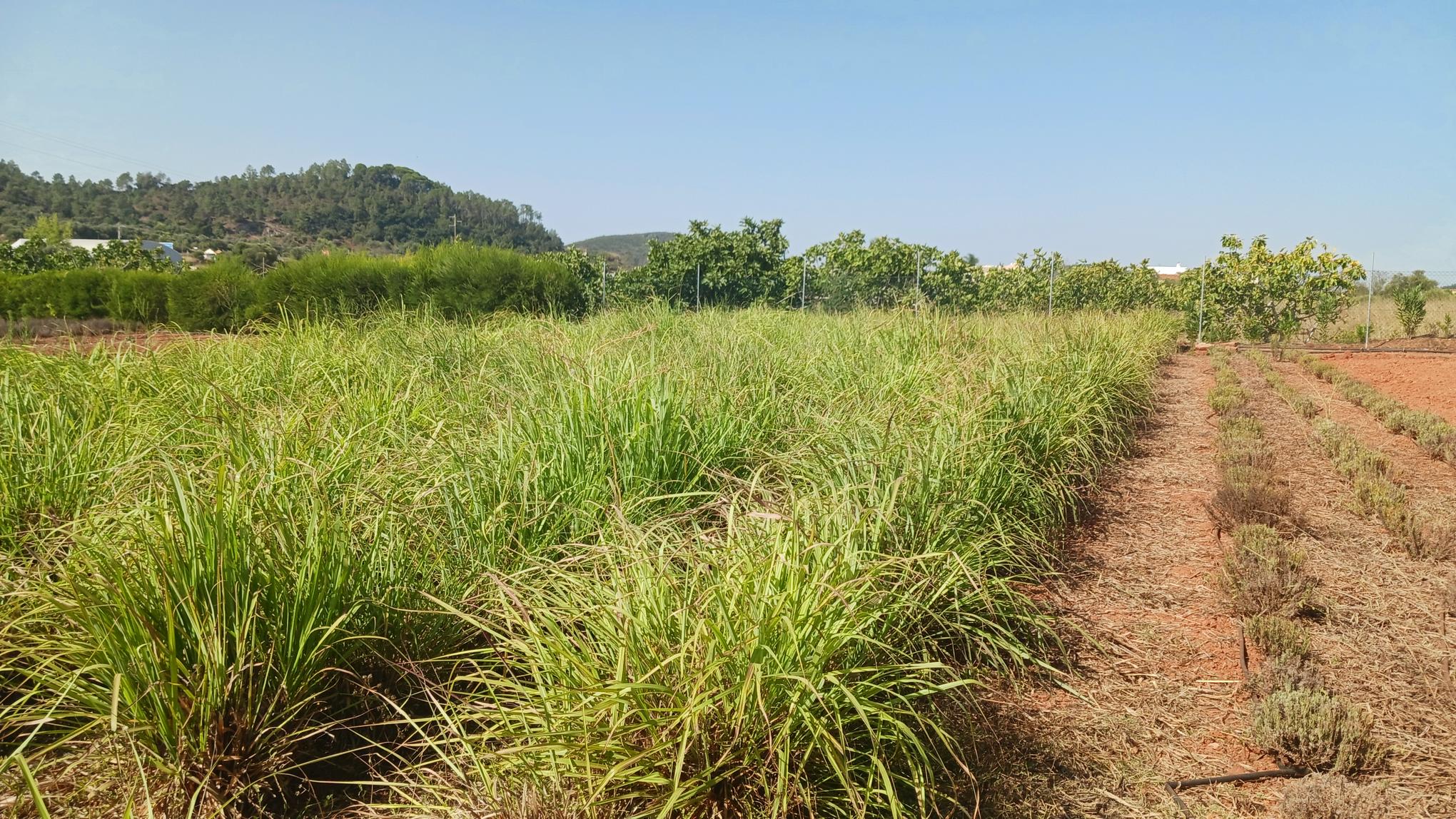
Lemongrass (Cymbopogon flexuosus), like vetiver and all grains, belongs to the grass family (Poaceae). This species is also known as East Indian lemongrass and is cultivated as a medicinal and culinary herb.
I grew the grass myself from seed a few years ago. As I've learned the hard way, it's only partially winter-hardy and is therefore tied up for protection during the winter.
Lemongrass can be cut several times a year. I cut it for the first time in spring when the winter protection is removed. The grass isn't used further but left as mulch between the rows.
Depending on the temperature and watering, you can almost watch the grass grow. The last cut shouldn't be too late so that the grass has enough time to grow back long enough to be tied up again in December.
Lemongrass is distilled fresh, so I harvest only as much as I can use in the afternoon and the next day. To fit into the still's column, it's roughly chopped.
This means the distillation of the entire batch takes 3-4 days, which I find to be the best solution.
Two distillations are complete.
The essential oil is lighter than the hydrosol and floats on top.
Theoretically, the yield should be higher with lemongrass, but in practice, many factors come into play, so it's not always easy to understand why the result is the way it is.


Nevertheless, it's a wonderful essential oil, just like the hydrosol, which also possesses many beneficial properties.